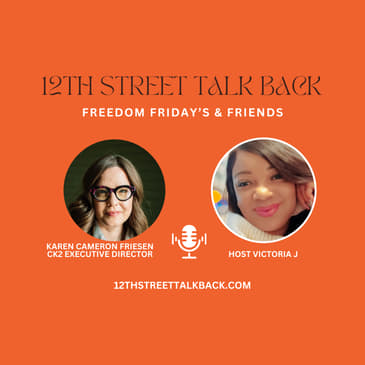
Karen Cameron FriesenExecutive DirectorCk2 Inc.B.Ed, MA (English), Associate of the Royal Conservatory of Music, Toronto (Piano Performance)A passionate educator and fearless advocate, Karen has taught from preschool through undergraduate levels. Karen's work with business and education leaders and parenting five amazing kids uniquely inform her leadership with Ck2 Inc. Using neuroplasticity to change the brain, she helps people of all ages overcome challenges related to:ADHDLearning difficulties such as dyslexia, dysgraphia, and dyscalculiaAnxiety and depressionBrain injury
Stroke
Brain fog from cancer treatments, Long COVID, and perimenopauseMemory loss
Addiction
Our brain training exercises have helped thousands of people around the world rebuild their lives after a diagnosis or injury. We want you to be our next success story.
Website: https://www.ck2inc.com/FB: https://www.facebook.com/profile.php?id=100057807993586Insta: https://www.instagram.com/ck2.inc/LI: https://www.linkedin.com/in/karen-cameron-friesen/
12th Street Website:12thstreettalkback.com
Music from #Uppbeat (free for Creators!):
https://uppbeat.io/t/pecan-pie/light-rush
[00:00:00] Unlock a new era in podcasting with unfiltered studios ready to break free from the
[00:00:11] ordinary dive into a world where authenticity meets innovation our network isn't
[00:00:17] just about podcasts it's a revolution from nostalgia to movies sports to
[00:00:23] self-improvement find your favorite podcast in an array of diverse shows only at
[00:00:28] unfiltered studios join the movement subscribe to unfiltered studios today and
[00:00:34] join the podcasting revolution unfiltered studios where every voice finds its
[00:00:40] place visit unf pod calm today to find your favorite show unfiltered studios
[00:00:48] will help you press record
[00:00:58] welcome welcome welcome welcome to the show everybody another Friday another
[00:01:07] friends and family gathering guys we got amazing guests coming up for you
[00:01:13] guys in just a few minutes but you know what we do you know what the show is all
[00:01:18] about let's give guys some praise right where you're sitting right where
[00:01:22] you standing right where you lay and perhaps heavenly Father we just thank you
[00:01:27] this day for blessing us with our amazing guests Karen Father God may we have a
[00:01:33] wonderful wonderful conversation those that have ears to ear let them hear
[00:01:39] oh Heavenly Father let the words of your daily bravery as to cross the tables
[00:01:43] of our our hearts today God Heavenly Father as we go forth in this fellowship
[00:01:48] today Father God we just ask that you bless each and every person that's in
[00:01:54] the sound of my voice thank you and Jesus name we pray amen guys I'm so
[00:02:00] excited for our next guest our next guest her name is Karen Cameron
[00:02:06] freezing and she's coming to us all the way from Canada and let me tell you
[00:02:13] guys a little bit about Karen before we bring her to the stage Karen is a
[00:02:19] professional educator fearless advocate Karen has taught from preschool
[00:02:25] through undergrad levels Karen's worked with business and education leaders
[00:02:31] parents of five amazing kids uniquely informed her leadership to what we're
[00:02:38] gonna talk about today or CK2 Inc. using changing the brain and helping people
[00:02:46] of all ages overcome challenges related to HGAD
[00:02:53] learning disabilities such as dyslexia anxiety depression brain injury stroke
[00:03:01] brain fall from cancer treatments long COVID pre-medipal's ladies memory loss
[00:03:09] and addition addiction guys welcome to the show miss Karen Cameron freezing
[00:03:19] welcome welcome Karen it is so nice to have you here today with us thank you so
[00:03:29] much I'm so glad you decided to go on the show as as normal guys if you have
[00:03:35] any questions for Karen the link is pinned in the chat you're more than
[00:03:41] welcome to come up respectfully of course and ask any questions that you guys
[00:03:46] might have so Karen how are you today I'm doing amazing it is just been a
[00:03:52] beautiful Friday here in central Canada we've we're in that interim spot where
[00:03:57] it's either rain or snow and today is rain and that's really okay same same
[00:04:03] right here in the great state of North Carolina we got rain yesterday it was 84
[00:04:08] degrees oh and we're just in that in between stage where you don't know if it's
[00:04:14] gonna be summer you don't know if it's gonna be a tidbit colder and it's trying to
[00:04:18] sneak out of winter into spring but I'll take the spring all day every day me
[00:04:25] to yes so Karen tell us a little bit about who Karen is thank you for that
[00:04:34] you know your mom yeah yeah I think for runner maybe that's a good word for me
[00:04:43] I am someone who sees future possibilities and really digs for them and so each
[00:04:51] different stage in my life I've I've just taken on adventure and looked for
[00:04:57] possibility and a lot of that has centered around education and now parenting kids I have
[00:05:04] three adult kids and two in high school right now but they have taught me so much
[00:05:10] and allowed for opportunities to really look at different ways of learning and
[00:05:15] different ways of thinking so yeah happy to share more but why why don't you ask me some
[00:05:21] questions that would really impact your audience that's right well that impacts I mean you've got
[00:05:27] your hands full and I love the kids that's what this is all about over here at 12 Street Talk
[00:05:34] Bat just giving back to the community I have three young adults myself so as an educator what are
[00:05:41] you most passionate about I want people to be able to perform at their best so wherever they are
[00:05:50] I want to make sure that they have the tools to be able to succeed and that in my house how
[00:05:56] hold look like thinking differently about education and thinking differently about how do
[00:06:01] equip people to do what they needed to do shall I tell my son's story can I can I lead with that
[00:06:09] yes of course share share share share so we knew from this start that some of our kids would
[00:06:17] would not be as well suited to a traditional classroom setting and that's my training I have a
[00:06:22] background I have a teaching degree I taught junior high I've taught at college as well
[00:06:27] and I could just see that wasn't going to be a very good fit for some of our kids and so
[00:06:33] that kind of put us on this alternative education route but it allowed for lots of flexibility
[00:06:40] to try and find different ways of responding to their learning needs and eventually what it led
[00:06:46] to is the work that I'm doing now which is using brain training exercises to actually change your
[00:06:53] brain it's called the aerospace Smith program but what kind of motivated that piece was we received a
[00:07:00] really dire diagnosis for a second oldest son we were told he wouldn't achieve beyond a certain
[00:07:06] grade level very elementary learning and my husband Kristen I we just knew that that wasn't the
[00:07:12] future that was ahead for him and so God just let us through all of these different steps that ended
[00:07:20] up stopping with that aerospace Smith program and so to go from this situation where he
[00:07:27] wouldn't didn't have a future of success before him he spent about three years in the program part
[00:07:34] time to full time and he's currently a fourth year full scholarship student athlete at a nationally
[00:07:43] ranked university he's going to be eligible for the um football draft for the Canadian football league
[00:07:50] next spring and he is working hard at that so again just this transformative change for him
[00:07:56] which I'm so thankful to have that my family has experienced that and now to have the opportunity
[00:08:03] to share that with other people has been amazing we have so many beautiful stories of transformed
[00:08:09] lives because of this different approach to learning okay wow I did go over to your website in
[00:08:18] idea see the aerospace Smith I was going to ask you a question what's the difference because
[00:08:25] um I see here it says ck2 and ink and that's what I've got paying to the bottom of the website
[00:08:32] is I know it's one and the same you know under the same umbrella but is there a difference between
[00:08:39] the aerospace program and the ck2 so ck2 is my business and this like I said a bit of a
[00:08:47] four runner I try I've been able to share the things that I've gathered over the years in a bunch
[00:08:54] of different ways and so the ck2 allows me to provide programming in alternative education settings
[00:09:01] I taught piano for many years that was kind of that realm of fine arts and education happening
[00:09:09] over there and because of that work we then became a certified site for the aerospace Smith program so
[00:09:16] we are an authorized um site to deliver this cognitive enhancement programming so we provide the
[00:09:25] aerospace Smith program and ck2 is just the name of of our specific site there are actually a hundred
[00:09:31] sites around the world that provide this programming but aerospace Smith itself is just transformative
[00:09:37] well tell us about aerospace Smith I am so excited to dig in and I don't want audience to get
[00:09:44] and learn as much as they can in the small window time we have mm-hmm for sure so um the aerospace
[00:09:51] program was developed in the 1970s in Toronto, Canada and it actually grew out of Barbara
[00:09:58] Aerosmith Young's personal experience she's our founder she's also just an incredibly insightful
[00:10:05] woman with incredible amounts of grit she herself had some very significant learning difficulties
[00:10:12] but she also had areas of great strength and she was able to um to just stay rooted in that
[00:10:21] strength that she had in order to do research and she took two pieces um two scientists work
[00:10:28] and and married them together in order to develop this program so the first was a Russian scientist
[00:10:34] named Luria who was working with people who had brain injuries from the war and he was specifically
[00:10:40] working with one client whose brain injury resulted in some outcomes that looked very similar to
[00:10:47] what Barbara was experiencing in her life through learning difficulties and so that led her to that
[00:10:55] thought that certain areas of the brain are responsible for certain areas of of cognitive function
[00:11:03] so that was one piece and then the second piece was um another researcher from California who
[00:11:12] provided enriched environments and he was doing studies with rats where those rats that were in
[00:11:18] enriched environments meaning that they could be creative and they had um mazes that they were
[00:11:24] solving things to do that were enhancing their life experience on um on examination of those rats
[00:11:34] they found that there were more neurological connections as well as their brains were bigger than
[00:11:40] those who weren't in enriched environments so Barbara took those two ideas and put them together
[00:11:46] that if we could provide enriched environments in specific areas of the brain for specific areas of
[00:11:54] the brain we can actually make change and so that is completely that concept of neuroplasticity
[00:12:02] it used people used to think that the brain never changed and her work as well as all these amazing
[00:12:09] neuroscientists who have been working in this field for so many years have shown that the brain
[00:12:15] is able to change in adapt that you can re-root neuro pathways and especially when talking about
[00:12:21] brains that's what you want you want the most efficient way to the answer possible and when you get
[00:12:30] inefficiencies that's when um that's when things stop working for you or don't work as well
[00:12:38] and so what Barbara was um doing through her work is she took this these two concepts and started
[00:12:46] to develop exercises in order to target very specific cognitive functions and so in her life um
[00:12:55] she struggled with symbolic relationships so that's part of an executive function and it's actually
[00:13:03] one of the key areas that people with ADHD or if you had a brain injury or if um yeah
[00:13:12] if you yeah ADHD and brain injury or even stroke those are really key areas to target and even
[00:13:19] mental pause it's kind of like the cognitive area of cognitive areas and so for her that meant she
[00:13:28] she couldn't under she knew that her mother's sister was someone in her life but she didn't
[00:13:38] understand that was also her aunt or right she couldn't fit together the ability to um relate to
[00:13:47] multiple people in a room or to be able to really um understand cause and effect in her life
[00:13:56] and so she targeted that area specific area to start with and again with all of that determination
[00:14:03] over time she was able to see shifts for herself and then she was able to focus on things like
[00:14:09] kinesthetic perception being able to feel yourself in space she tells stories about um crashing into
[00:14:17] things or that her mother was concerned that she was going to chop off a finger when she was
[00:14:21] chopping vegetables um so again she took and developed the suite of exercises 19 different ones
[00:14:29] that would target these different areas and uh yeah and so that's now the work that i'm
[00:14:36] that i do we take people who like all of us have inefficiencies so for me i am not a very spatial
[00:14:44] person and i have a house full of kids and i drove a suburban for many years i couldn't pair a little
[00:14:51] park that suburban without lots of practice but that didn't really change my everyday life
[00:14:58] right for someone else who has multiple areas that just aren't working so maybe
[00:15:05] you struggle to manage yourself and be able to to be in a room of people and still feel confident
[00:15:14] and be able to express yourself maybe you struggle with memory and people's names just slip away or
[00:15:22] i had a student he wasn't able to remember things over the course of his day what are we doing this
[00:15:29] evening oh no i haven't remembered i'm supposed to be here at this dinner time and so for him he had
[00:15:36] reminders every 15 minutes in his phone before he came to us because he needed that external
[00:15:43] compensation in order to have success in his everyday life for some people um it's um nonverbal
[00:15:51] reasoning being able to understand social situations and so what we do in our work is we use an
[00:15:58] assessment process that looks at these 19 areas and then we have a scale it's 12 points starting from
[00:16:06] very severe and then 10 points up and then average and above average and so our goal is to take wherever
[00:16:14] you fit on that scale and move you up to average and it's like going to the gym and here's
[00:16:22] where i love to talk about my son because he goes to the gym and he does a buy oh here we go
[00:16:27] you get in the screen here he does a bicep curl and it does not look like football but it totally changes
[00:16:36] his football game so the same thing maybe you have a hard time understanding social cues and you
[00:16:45] miss when someone's using sarcasm and maybe that results in some kind of um taking taking advantage
[00:16:53] of a situation and so you're exposed in a different kind of way so what we do doesn't look like
[00:17:01] coaching you in those situations it's not like having someone who can be in your ear and
[00:17:08] letting you know oh can you think through this we actually have an exercise that you do
[00:17:15] and the outcome is that you're nonverbal reasoning changes so it in some cases will do will use
[00:17:27] for example an exercise that helps with precision and automatic output and it's a paper in pencil
[00:17:36] activity it doesn't teach you handwriting but it improves your ability to hand right and also
[00:17:45] translate what's in your head to what's on the paper so i don't actually care if you can precisely
[00:17:52] do the activity or the um or the automaticity for that activity it doesn't matter that you can
[00:18:00] do those things but you do them so that you can get the result right right right
[00:18:06] right right and then the reality is it just transforms people's lives
[00:18:13] right i want you know i was particularly interested in it caught me when you said a DHD because
[00:18:20] that's something i dealt with with my 27 year old thank god we caught it yeah when she was younger
[00:18:29] and i can i can relate hands on and maybe it was missed on my side of the family or for that
[00:18:37] side of the family because some of the things that when i was on your website reading up about
[00:18:42] i could identify with yeah and is it something and i know we spoke about a lot because i also
[00:18:50] read up a little bit on it prior to ever meeting you about uh perimenopause and how we have
[00:18:56] memory loss and things of that nature and i can say for sure going through that
[00:19:02] that takes life is it something that's hereditary what because we listed so much
[00:19:08] that you guys help people with with the memory loss the brain injury uh the addictions
[00:19:15] besides ADHD is that something that we've discovered that possibly could be hereditary or just
[00:19:22] something that just happens in life you know i i am certainly not an expert there so i won't
[00:19:29] i won't be able to answer but what we can do is it actually doesn't matter the reason
[00:19:36] for the injury or the learning difficulty we just look at the outcomes so just like
[00:19:44] our Russian scientist Luria was working with someone with literally a bullet in his brain
[00:19:51] in a certain area he had the same outcomes as Barbara did just from learning difficulties she
[00:19:58] had from birth so we're more concerned about what is your cognitive function in each of these areas
[00:20:06] and then let's work on strengthening those capacities so for example if you have a child who's
[00:20:14] struggling in math we don't actually teach them math we work with a few different areas one being
[00:20:22] kind of mental math being able to take that number and put it in the right spot in your brain
[00:20:27] and then manipulate it and then we take another area that again has to do with logic and reasoning
[00:20:35] and we strengthen that and maybe we're even going to work on an area that has to do with kind of
[00:20:42] with predicate of speech and we use this auditory activity that then increases your ability to work
[00:20:49] with multiple steps in problems so again we haven't taught you math but then when you do math
[00:20:58] you can learn so much more easily we have strength in your capacity to learn exactly so for example I had a
[00:21:08] young guy he had a brain injury when he was in his second year when he was in grade two and
[00:21:17] and he retains some really amazing really amazing strengths he had this great memory especially for
[00:21:27] facts about the natural world he was like a walking encyclopedia you could tell us also it's
[00:21:34] wonderful things but he really struggled with focus and attention that logic and reasoning
[00:21:40] piece wasn't working for him and his math function was very low and so kind of that first year
[00:21:47] we we end up with these student profiles where we're looking at their progress reports and
[00:21:53] in his measures he was making good progress because we have 40 years of data that we can say
[00:22:01] a student who's 11 and it started at this level on our scale if he makes it this far we can still
[00:22:09] say he's making good progress even though his rating shift doesn't happen so his first year he
[00:22:15] didn't make a lot of shifts but the second year wow a whole bunch of things changed for him and he
[00:22:22] made it so far up that scale in the third year it was just like icing on the cake and and what
[00:22:28] happened was in that third year he worked with us he then did all of the elementary math curriculum
[00:22:36] from September through August so he was ready to enter his grade 9 his
[00:22:45] I can't even freshman year I was trying to remember grade 9 then for his freshman year of high school
[00:22:52] because his brain was then just ready for that and that's what's so exciting it just opens possibility
[00:22:59] wow well I guess that leads me into my next question I was going to ask you
[00:23:06] is it certain methods or techniques that you use for each individual client because like I said
[00:23:12] earlier we listed ADHD learning difficulties such as dyslexia and zyt depression is it different
[00:23:20] methods or is it all kind of the same good question method so what we do is we develop an
[00:23:29] individual learning plan so again we take a look at those 19 different areas so typically when you
[00:23:36] do an educational psychological assessment it's like you get a picture for that moment in time
[00:23:43] where you fit in a bunch of different cognitive measures the difference with how we do it
[00:23:50] is that we give you that snapshot of that moment in time but in such a way that it's targeted to each
[00:23:59] of the activities that we have so you're going to get a profile where um of those 19 areas and we
[00:24:08] figure out where you fit and then that tells us which specific exercise to use as well as what
[00:24:16] level in that exercise you should start at and if you're eight maybe you're going to start here
[00:24:22] and you only have to go a little ways until you hit that average rating um if you're an adult maybe
[00:24:28] you're gonna go farther in that so we really target based on your individualized profile as well as
[00:24:37] what our priorities for you and thinking of an adult student right now um he came into the program
[00:24:44] he works for the our federal government and he works in weights and measures and he wanted to just
[00:24:49] kind of work on that logic and reasoning piece for himself that was something that he just wanted
[00:24:54] to have more facility with but we'd noticed in his everyday life that he would come across as really
[00:25:02] kind of gruff and sometimes unkind and for and we're like oh I bet we're going to do this
[00:25:10] assessment and I bet he's gonna have to work on his nonverbal reasoning and so we went into the
[00:25:17] assessment we looked at all of these different areas and what was so very interesting for him
[00:25:23] was he actually was average in nonverbal reasoning but his processing speed was slow
[00:25:31] so he understood the social situations but it wasn't in real time so then what what we could do
[00:25:39] is prioritize both the logic and reasoning that will help with his processing speed
[00:25:46] and then we also used another exercise for problem solving because that was just that
[00:25:53] it's an another executive function area but it also helps you with prioritizing within your day
[00:26:00] and set it yeah setting in agenda and following that through and and that whole problem solving
[00:26:06] piece and it was so interesting because what I noticed over time was that he just seemed nicer
[00:26:15] because his processing speed caught up can you imagine what that does for his family right?
[00:26:22] Yes I noticed a little bit of that not saying that it's the same diagnosis
[00:26:29] I noticed that a little bit in my daughter
[00:26:34] it's not that and she's a very social person yeah I'm very bubbly very happy but I just noticed
[00:26:41] it takes a little bit longer for her to process so I have to re-intrate each time I tell her something
[00:26:51] and can just kind of keep trying to drive that nail home so this interesting that you
[00:26:58] spoke about this particular individual and again I'm not saying it's the same thing but
[00:27:03] the way the mind works and that's the same thing for me I was addicted to alcohol for
[00:27:09] some time a small period in my life and I noticed some changes in my memory I noticed some changes
[00:27:15] in my speech where I didn't slur before now I get tongue tied I didn't get tongue tied before
[00:27:23] and you never really think about that stuff when you're going through your hurt and you're pain
[00:27:27] you just want something to numb it but the end result is when and if guys will people do decide
[00:27:34] to get clean you start to notice the damage that you've done not only to your body but your brain
[00:27:40] as well because I do notice some difference in my memory my speech and stuff like that and you
[00:27:46] mentioned that you mentioned addiction is it a little bit different for addiction then disability
[00:27:54] or do you find that it's the same type you know again we're just applying these exercises to the
[00:28:01] areas that you need and what is so amazing to hear it tends to be that Australians and New Zealanders
[00:28:12] adopt more innovative things faster than the rest of us in North America and so our program has been
[00:28:20] there for quite a long time and they recently did a study where they used this one executive function
[00:28:30] activity they used it at an adult and teen challenge of organization I'm not sure if you're
[00:28:38] familiar with them there so it's an addiction support it's a a Christian addiction support
[00:28:46] approach where people live on campus in house or that and so they use this program in a trial
[00:28:56] setting over a two year period and what was so amazing was to see those same results that were seeing
[00:29:02] for kids in school with learning difficulties those were the things that people in addictions
[00:29:09] were experiencing as well that they were seeing growth in their processing speed and their ability
[00:29:16] to understand social situations and it allowed them to better engage in their recovery process
[00:29:24] to both think through their feelings and the logic and reasoning that it's needed for that
[00:29:29] and then the beautiful thing is and I'll connect this to ADHD as well what we see is for a lot of our
[00:29:37] our clients is that there's that weightiness of feeling like you're not you're not
[00:29:45] doing as well as you can in your everyday life you spend a lot of time second guessing yourself so
[00:29:51] what if you all you can kind of manage as yourself and so for people in addiction settings maybe
[00:29:59] they can even manage it manage themselves and so we use an activity that helps you manage one item
[00:30:07] and then add another and add another up to 10 different items as if then you can interact with
[00:30:15] people in a large group setting or maybe then you can manage your bills and drive your car
[00:30:21] and hold a job and manage your schedules maybe things you haven't done before we work on that
[00:30:27] cognitive function again doesn't look like coaching doesn't look like therapy not talk therapy at all
[00:30:34] you're you're just doing this the brain equivalent right him again of a concept curl for
[00:30:41] your brain and then just sit for you and what is so exciting as we see statistically significant
[00:30:50] differences in people's social and emotional well-being so whether a addiction settings or just
[00:30:58] someone managing their life you're going to now be able to have more success in activities of
[00:31:05] daily living so those positive those leadership attributes that you know are in there that your
[00:31:12] daughter has and that interesting interactivability now it can come out because she's not having to
[00:31:18] kind of second guess or has trouble focusing on the things she needs these exercises help you
[00:31:25] store the pieces in the place you need it but then also be able to access them in the most
[00:31:30] efficient way possible and so for my guy I had mentioned the young man who had had to keep his
[00:31:38] schedule in his phone every 15 minutes his day he was he just gave the program his all he's he did
[00:31:46] about a year's work in four months and he moved from central Canada to a 30 week program in New Zealand
[00:31:55] wow was having success there he actually got a job partway through his program he had had trouble
[00:32:03] maintaining a job prior to then he was a young adult and he ended up becoming the manager of a
[00:32:11] team that was in charge of events set up like huge changes from where he was that's amazing
[00:32:19] you probably already covered most of what I was going to ask you for sure yes you did
[00:32:27] you did we talked about 80s 80 HD and the learning difficulties in filling in those gap but what
[00:32:33] does it look like for someone that's seeking your services I guess I would I could rephrase that
[00:32:39] by saying where do they start you know a great place is just to send us a message on our inquiry
[00:32:46] form through our website we'll do an informational call I would explain more of how the program works
[00:32:52] obviously and and really it is um we offer online programming so some of it you can do independently
[00:33:01] generally each area you work on is about 200 minutes a week so whether you schedule that if
[00:33:08] you're a professional or someone yeah professional experience wherever yeah exactly you can you
[00:33:17] can choose your times that you work we also have a fully online classroom that you can work in as well
[00:33:23] so there lots of different iterations of how you can do it but basically you work in this program
[00:33:29] for the amount of time that you want to generally it's two to five years is kind of the range
[00:33:35] that we have for people that have more significant issues some people do it in a much shorter time
[00:33:43] for example um people would move you used to have to be located where an arrowsmith program site was
[00:33:50] people would move for the year or two years in order to take the program and some would come
[00:33:56] and do an intensive program in the summer where they would for six weeks they would work four or five
[00:34:02] six hours a day in one of the in this executive function cognitive area and just really reap
[00:34:09] the benefits from that time so that the beauty is the changes are permanent so when
[00:34:17] if you need to take a break you can be assured that that will still be available to you
[00:34:24] to access again in the future if you haven't gotten to average and that's that's lovely because
[00:34:29] you're using that area in in the rest of your life so you don't have to continue the exercises
[00:34:36] anymore and that was my next question that you just answered for me you are just moving right along
[00:34:42] as I was going to ask you was it on site or is it something that was available online I've got
[00:34:47] your website pinned to the bottom of the screen oh we talked about uh the aerospace program and you
[00:34:55] said it was the solution to turn on the faucet so yeah in general too as far as your your son
[00:35:03] and the things that we were going through with him oh wow one last question yeah I want
[00:35:09] to ask you does eating habits and exercise play a role in everything that you try to provide
[00:35:17] to your clients you know it's a different way of thinking about your health and that's what I'd
[00:35:25] like to leave people with today is that it's a tool in your toolbox and you want to do those things
[00:35:34] that are going to uh make for amazing health make for you to be able to perform at your best
[00:35:43] so we know that brain change occurs so we have um bdnf production is what your body uses to make
[00:35:53] new neuro connections so we know that in our work with if in our in-person classroom we take our
[00:36:00] students for a walk before we get started so for you maybe you're gonna if you're working out during
[00:36:07] the week do your workout then do the brain training exercises and then we actually do a fair amount
[00:36:14] with mindfulness as well where you take time to consciously give your brain some diffuse time
[00:36:23] and that's when change is occurring as well so whether that is honestly sitting and looking at the
[00:36:29] leaves on trees for 10 minutes or I really like um Andrew Huberman in his podcast um Huberman lab he
[00:36:40] shared a non-sleep deep rest just like a little 10 minute guided thought about relaxing different
[00:36:49] parts of your body and I always want to be cautious about that because there there are lots of
[00:36:54] meditation things that have spiritual overtones this is very much just physiological so that's
[00:37:01] to the exercise piece you can't go you can't eat Doritos and go to the gym and explain
[00:37:09] the game results right right right right right go those good things for yourself and be
[00:37:16] efficient about it like if you're the the work that we do isn't easy we basically find the areas
[00:37:23] that are hardest for you we program you just above the area that you're capable of but it's still
[00:37:31] hard work and so like think of it like an athlete come in get your get your body move even before
[00:37:39] we came on I was out doing a little jumping around and getting some right errands some sun on my
[00:37:45] body just so I could was coming in with the right energy for you today but like that was just
[00:37:50] strategic what I wanted to do I do I have a we have a young lady in our network she also has a
[00:37:57] podcast uh hippo wellness under the unfiltered studios podcast and sometimes when I find myself
[00:38:04] wound up like a ball sometimes she does start her show with a little bit of meditation and
[00:38:09] breathe in exercises and she talks you through it and I can find myself just coming right down
[00:38:16] opposite on her show so you're definitely right as about the energy and just like any diet you're
[00:38:23] not gonna stuff cake in your mouth if you and then go to the gym yes that feeds the purpose
[00:38:30] well and you want you want to move yourself into that parasympathetic mode so that's where
[00:38:36] your body isn't in fight or flight and that's where a lot of people are whether they've been
[00:38:41] struggling with success for ADHD or they've had a brain injury and life is just a struggle
[00:38:48] you want to move your body into that system where it can build and so our exercises are building
[00:38:55] exercises to think through how can you care for yourself and sometimes it's just just a little shift
[00:39:03] James clear talks about habit stacking in his atomic habits book where you just take something
[00:39:09] you do regularly like maybe it's your having a cup of coffee in the morning well habit stack
[00:39:16] have that cup of coffee will use it outside and get the morning sunlight on your face for five
[00:39:22] minutes because that's going to reset your circadian clock which is gonna have good effects the next day
[00:39:29] so just yeah you just want to put all those pieces in I had one more story if we have a minute
[00:39:35] yes we do yes my all means any information yeah stories information any gods I have a year for it
[00:39:43] all well I was just thinking of a new student so this is more on that on the parry menopause and menopause
[00:39:52] side of things and new student I met her at a convention and didn't really get to chat very much
[00:40:01] about where we were coming from but then we did an informational conversation turns out she is
[00:40:08] a mom to nine she has 30 grandchildren and she has a 500 eight
[00:40:16] armada and as part of that she has a lot of cattle that she cares for and so she started working on
[00:40:23] our executive function exercise kind of in near the end of February so it was about two weeks in
[00:40:31] and and we were doing our online check-in where she's done some work for a while and then the two
[00:40:37] of us meet via zoom and we kind of go through some of her goals and and see where things are at
[00:40:43] and she says you know this is helping me drive my tractor better well please tell me about that
[00:40:50] and she said well in this tractor I have a gear to go forward and back I have one to add gas or come
[00:40:59] off I also have a bucket function that I need to grapple and dump and turn and all together there are
[00:41:07] 12 different gears that she needed to manage in the course of feeding these cattle and
[00:41:15] she just had more clarity because she is working on being able to keep two different thoughts in her
[00:41:24] head at the same time and understand the relationship as one one part moves one way another part
[00:41:32] moves the other way this is in the exercise and it translated to how she was feeling
[00:41:39] making this tractor move and it also translated into her confidence speaking it was so interesting
[00:41:47] just to hear how her voice had shifted where she was very uncertain sounding and she's much more
[00:41:56] directed and able to follow through within her thought patterns even just communicating with me
[00:42:04] that how exciting is that just with a couple of weeks I need to tell you how to do about you
[00:42:11] oh I got everyone through a cognitive lens now yes yes yes as you were telling me that story
[00:42:19] he drives a truck all day a concrete truck but when he gets into the car he forgets it's not
[00:42:27] a pull down gear so in the car he's reaching for pull down gear instead of the drop neutral that's
[00:42:35] in the center and you know when you said that I could identify whether he was like he always goes I
[00:42:40] don't know what I'm thinking I'm not in the work truck I'm in the car right but
[00:42:46] little stuff like they're the little subtle stuff as you were saying you know that some of the
[00:42:51] methods and exercises could help with that is wonderful and my brain is over here running a thousand
[00:42:58] a minute I told you that before that my brain sometimes run faster than I can get the words out
[00:43:05] I know exactly what I want to say and it makes sense and it sounds good in my brain but it does not
[00:43:11] exactly come outright I've been practicing slowing down whether it takes me a little bit longer or
[00:43:19] not because I'm so excited in my brain and I'm a hyper person by nature anyway so I've been
[00:43:27] practicing little small tips but this is something that it sounds like my entire family can be
[00:43:32] to fit from you know and we all can and that's that beautiful piece it's we need to shift our thinking
[00:43:41] from an education model where you're compensating or finding workarounds for things in your everyday
[00:43:47] life what if we could take this program and change brains so that just like my son is not living in an
[00:43:56] assisted living situation for his life he's actually contributing and he's going after his goals he
[00:44:04] has this peak performance piece just the world is open to him and I like for all of our clients
[00:44:13] that whatever that little piece is for you it might be remembering a name or it could be we had
[00:44:21] a CEO who couldn't couldn't remember people's names and that's just the lexical function in his brain
[00:44:27] his lexical memory and who wants to sign a multi-million dollar contract with someone who can't
[00:44:33] remember your name well right it's just an exercise do the exercise 200 minutes a week maybe
[00:44:39] it's going to take you a few months but that function is going to be yours and then you get to use
[00:44:44] it wherever like this that's the advocacy that I want to do what if we could in the prison system
[00:44:55] that incidents of disability and brain injury and addiction is far higher than in the normal or
[00:45:04] the general population so what if we could could put this program there and change people's lives
[00:45:11] like could you imagine or that very underserved brain injury community what if people would write a
[00:45:19] prescription for cognitive exercise and experience that change for themselves wow yeah
[00:45:27] beautiful that's beautiful given back to the community that that's what we are all about over here
[00:45:33] I just you know that's something that I found out you have to add layers to I thought it was
[00:45:39] something that you could just jump right into full force and I'm finding that you can get
[00:45:44] you've got to get out in the community you got to see what the need is and you have to work on
[00:45:49] a small part at a time but I am determined to bridge that gap of communication between our
[00:45:57] generations I do think that there's a communication gap there and if we could just figure out
[00:46:03] what each generation wants to bring to the table and we may not agree with everything they'll
[00:46:10] say and agree to disagree but maybe we can find a solution to you know just bridging that gap and
[00:46:17] and I love that you have a beautiful spirit thank you so much for coming to the show Karen thank you
[00:46:22] for everybody you're welcome you're welcome you come back anytime your friend of 12th Street
[00:46:28] guys check her out check out our website I have it pinned to the bottom of the screen check out
[00:46:33] the arrowsmiths program um and let me make sure I get this right they can you have a facility and
[00:46:39] they can do it online as well am I correct absolutely the majority of our clients work online we can
[00:46:46] go anywhere in the world you can even take us backpacking with us we had one student who back packed
[00:46:51] all over the US while she was doing her work so so so flexible and so so much fun to be able to
[00:46:57] target things while you're on the rego thank you so much for that see guys you can take them on the
[00:47:04] go with you have a little support wherever you go okay Karen tell us where we can find you
[00:47:11] do you have a facebook page do you have an instagram and we got the website pinned to the end
[00:47:17] uh to the bottom of the screen can they find you on those places um and get a little bit more
[00:47:22] information or whenever you have events coming up yes absolutely you can totally find us online our
[00:47:30] website links to our facebook and our instagram um I had to quickly look up what is our instagram again
[00:47:37] it's a ck2.inc that you'll find us there and we're ck2ink on facebook but website is a great way to
[00:47:45] connect with us and we're always happy to happy to find opportunities we'll have actually have
[00:47:51] an informational um meeting coming up at the beginning of april so please watch your uh watch our
[00:47:59] website and and our socials and you can join us there as well and learn more about uh
[00:48:05] great great great great great and if and I'm following you guys I started following you guys on your
[00:48:11] facebook page i do have an answer but i'm more of a facebook gal my kids told me that Facebook is for
[00:48:17] old people and i said well you know what i better stay in my lane but i do have an instagram but i'm
[00:48:22] more facebook than anything well thank you so much Karen from joining the show you guys go over
[00:48:28] and check out their website follow them on facebook on instagram any of your social media platforms
[00:48:35] check out their event they have coming up in april and if i see it coming down my timeline
[00:48:40] on my social media pages i'll definitely reshare thank you thank you so much is there anything else
[00:48:47] you want to leave my audience before you leave today i just want to say thank you for having me
[00:48:51] it's such a pleasure to be at the table and and i want to leave your audience with hope maybe there's
[00:48:56] something that has been holding you back for a long time this again is a tool that you can use
[00:49:03] to shift your future and we know that healing is ours this is just a way of working it out so we're
[00:49:10] thankful for that too that's right thank you guys for joining us today and as well guys you can
[00:49:17] check us out Monday Wednesday and Friday for morning inspiration at 11.30 a.m we thank Karen so much
[00:49:25] for stopping by 12 streets out back where transparency is our love language guys don't forget
[00:49:33] to go follow her on any of her social media platforms and this will be available on youtube for
[00:49:40] live instant play and it'll be uploaded to any of your listening platforms on Tuesday of next week
[00:49:49] in just in case you forgot to catch the live thank you so much for joining us here at 12 street talk
[00:49:55] and we will see you back again on Monday